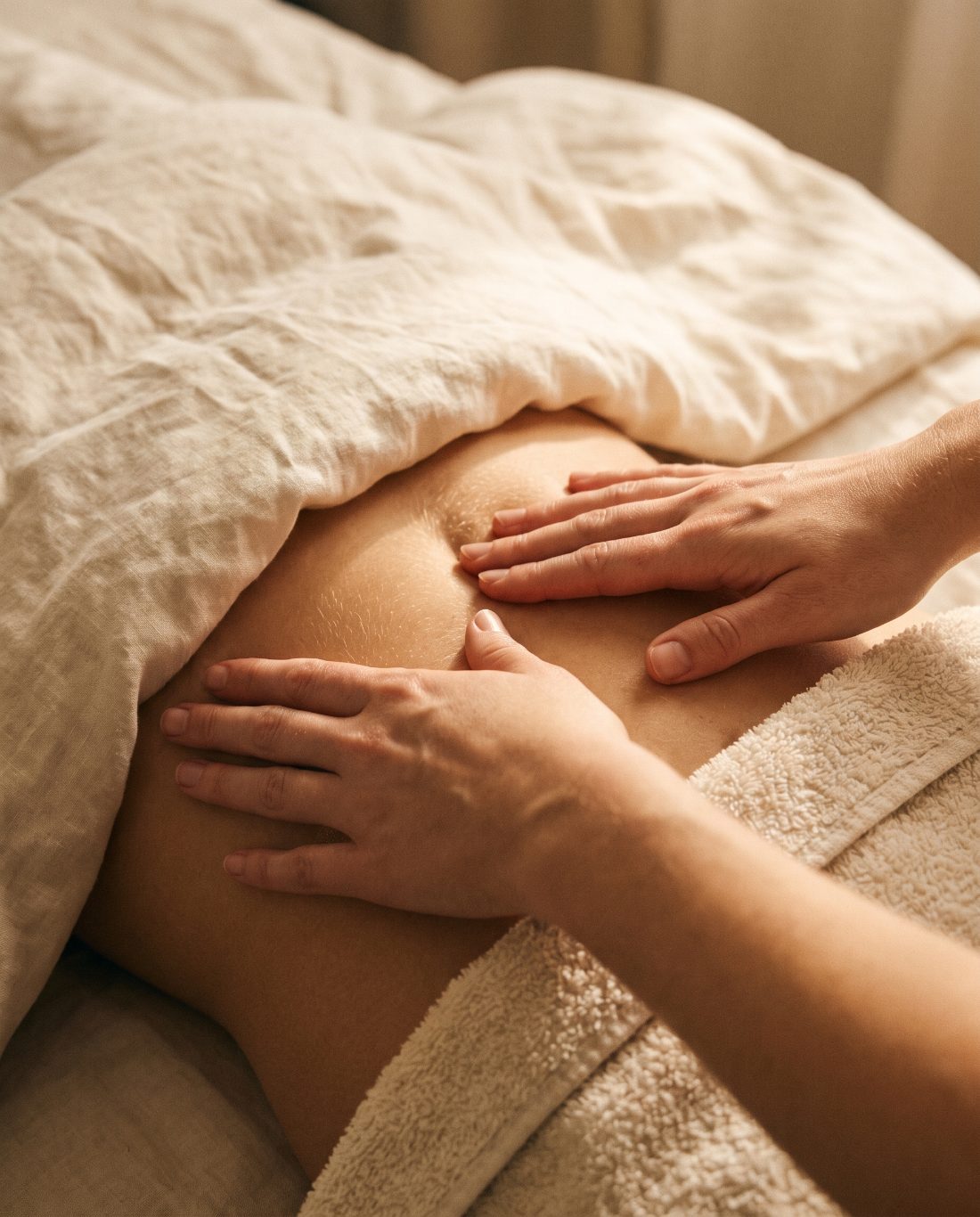

If you are having surgery — liposuction, lipo-sculpting, a Brazilian butt lift (BBL) or a tummy tuck — your surgeon has probably mentioned lymphatic drainage. At Marta C. we have supported post-surgical recoveries for more than 25 years, first in Colombia and now in Elizabeth, New Jersey. This guide answers the questions we hear most before people start.
Why drainage matters after surgery
Every surgery is a controlled injury to the tissues. Afterwards the body responds with inflammation and edema: fluid gathers in the operated area, which looks swollen and hurts. The lymphatic system collects that fluid, but it has no pump of its own — it moves with the muscles, breathing and external pressure. After surgery some lymphatic vessels have also been affected, so it works more slowly.
Manual lymphatic drainage helps that fluid clear with very gentle, rhythmic movements. And it does more than reduce swelling: keeping tissues soft while they heal helps prevent fibrosis, one of the complications that most affects the aesthetic result.
When can I start?
The short answer: when your surgeon approves it. Every surgery, technique and surgeon has its own protocol, and at Marta C. we never start a treatment without following their instructions. Starting within the first days or weeks after surgery is common, but your doctor sets the date, not us.
Our advice: message us before your surgery. That way we plan your schedule together and you arrive at your first session prepared.
How many sessions will I need?
It depends on the surgery, the size of the treated area and how your body heals. Several sessions over the following weeks are typical — closer together at first, further apart as swelling goes down. At the first assessment — type of surgery, date, surgeon’s instructions, scars, pain and swelling — we set a plan and adjust it at every visit.
How treatment changes by stage
- First sessions: very gentle work focused on drainage. The area is sensitive and pressure is minimal.
- Middle stage: we keep draining and start watching for firm or uneven areas.
- Later stage: manual techniques to soften tissue and refine contour and circulation.
Warning signs: call your surgeon
Post-op massage complements medical care; it does not replace it. If you notice any of these signs, stop sessions and contact your surgeon:
- Fever.
- Redness, heat or pus at the incision.
- Severe pain that gets worse instead of better.
- Pain or swelling in one calf.
- Shortness of breath.
What you can do at home
- Wear your compression garment and follow all your surgeon’s instructions: drainage does not replace them.
- Drink water and walk gently as soon as you are allowed.
- Watch your salt and rest.
- Be consistent with sessions: recovery is a process, not a day.
Post-surgical recovery in Elizabeth, NJ
Marta C.’s founder is trained in aesthetics and as a nursing assistant, and it shows in how we work: a full assessment, coordination with your surgeon and session-by-session follow-up. We see clients by appointment in Elizabeth and nearby. If you have surgery scheduled, message us and we will plan it together.
The information on this site is general guidance and does not replace your doctor’s assessment.