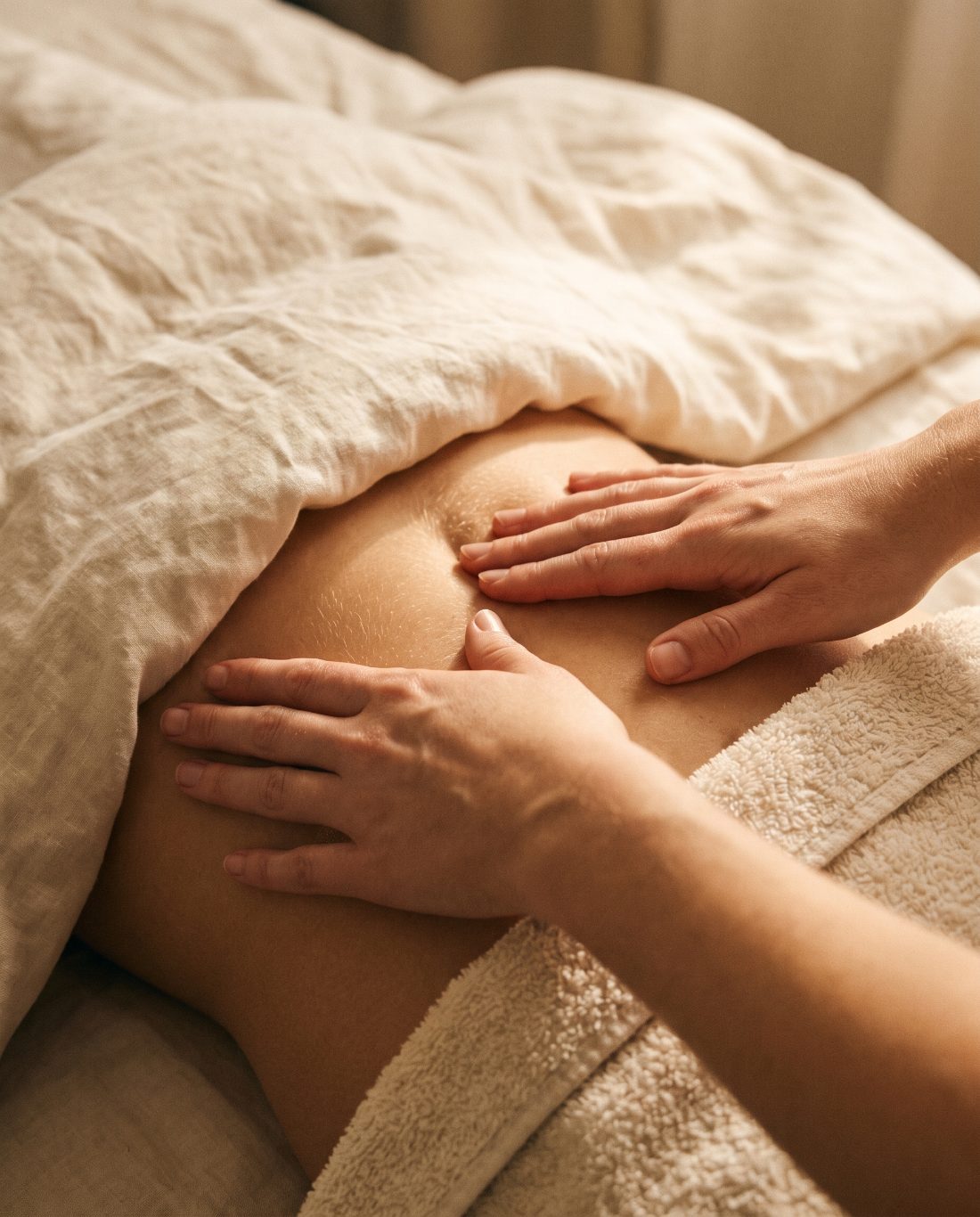
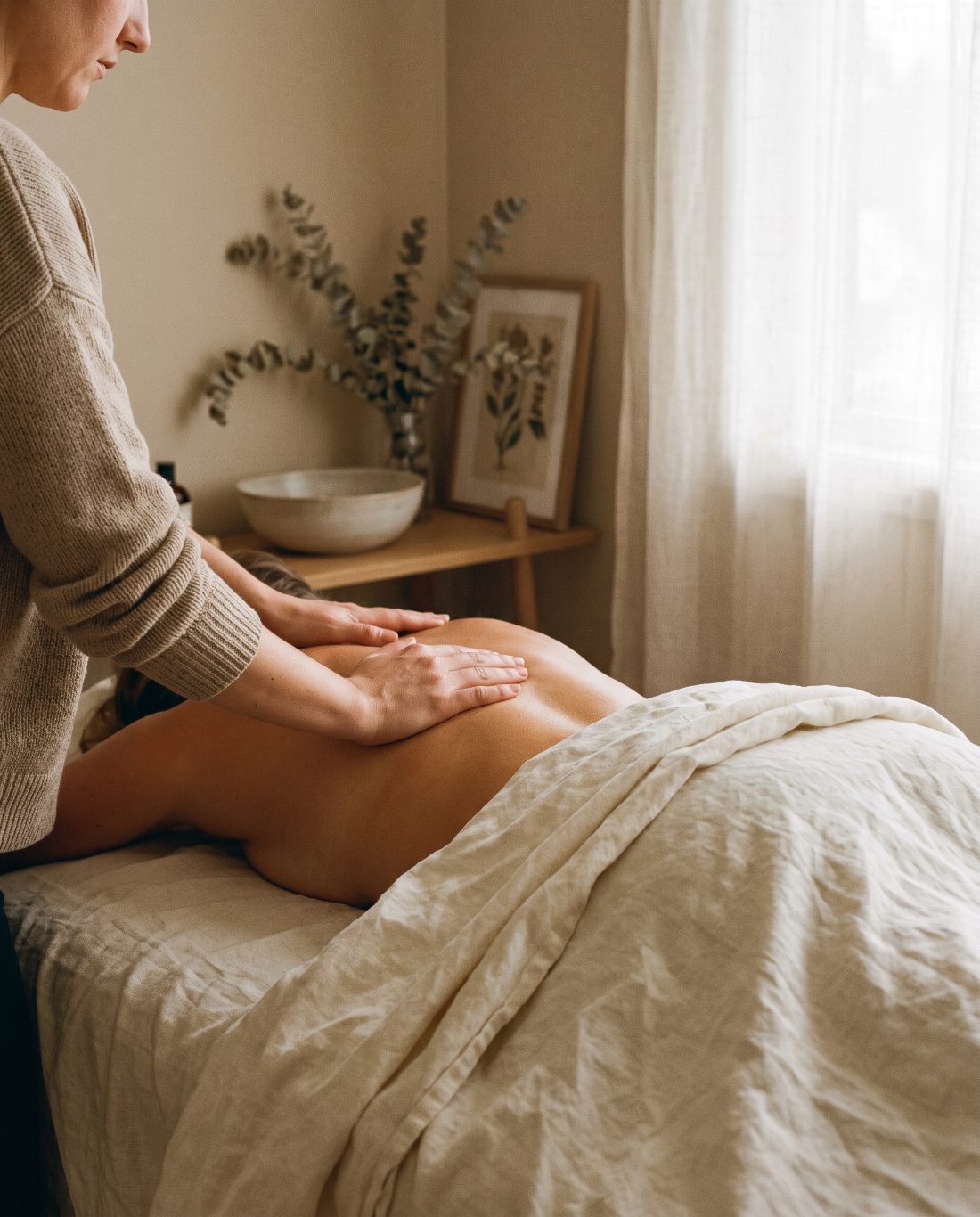
They are two of the most searched treatments in New Jersey’s Latino community, and it is easy to mix them up. Both are done by hand, both “de-puff”, both promise a more defined silhouette. But they work very differently.
Lymphatic drainage: fluid, not fat
Lymphatic drainage is a very gentle, slow, rhythmic technique that works just under the skin to help the lymphatic system clear retained fluid. It does not work the muscle or the fat. It is ideal for swelling, heavy legs and post-surgical recovery.
Reductive massage: active contouring
Reductive (body contouring) massage uses firm, fast, repeated strokes on specific areas — abdomen, glutes, legs — to boost circulation and sculpt. It is more intense and aims for a toning, contouring effect.
Quick comparison
- Pressure: drainage is minimal; reductive is firm.
- Goal: drainage clears fluid; reductive sculpts and tones.
- Feel: drainage is very relaxing; reductive is more active.
- After surgery: drainage yes (with approval); reductive, not in the early stages.
- Results: both progressive and built on consistency.
And Molding 5 in 1?
Molding 5 in 1 is Marta C.’s own technique and combines the best of both: it sculpts, drains and also works on inflammation, muscle tension and stress. 100% manual, no machines.
And if you want a bit of everything one day, the custom massage splits the session between relaxing and contouring strokes based on what you ask for.
Which one fits you?
- You feel swollen or are coming from surgery → lymphatic drainage.
- You want to tone and sculpt, and lower stress too → Molding 5 in 1.
- You want to relax and work on one specific area → custom massage.
Not sure? That is fine: at the first assessment we listen, set realistic expectations and recommend what truly suits you. We do not sell lies.
The information on this site is general guidance and does not replace your doctor’s assessment.